Amir Werner · 18 September 2026
Polish Secondary Reforms Spark Fresh Interest in Cross-Border Learning Exchanges
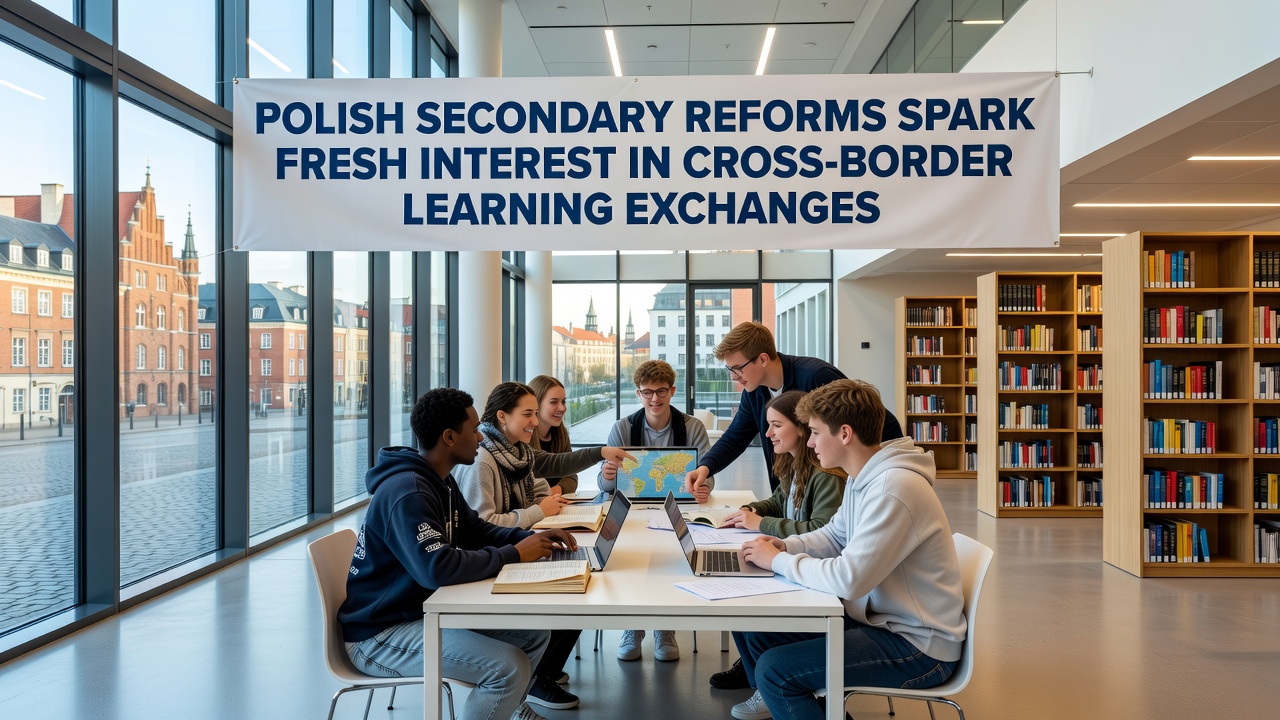
Polish secondary education reforms introduced in recent years have shifted curriculum priorities toward language proficiency, digital competencies, and international awareness, and these changes have coincided with rising participation in cross-border learning exchanges across the European Union and neighboring regions.
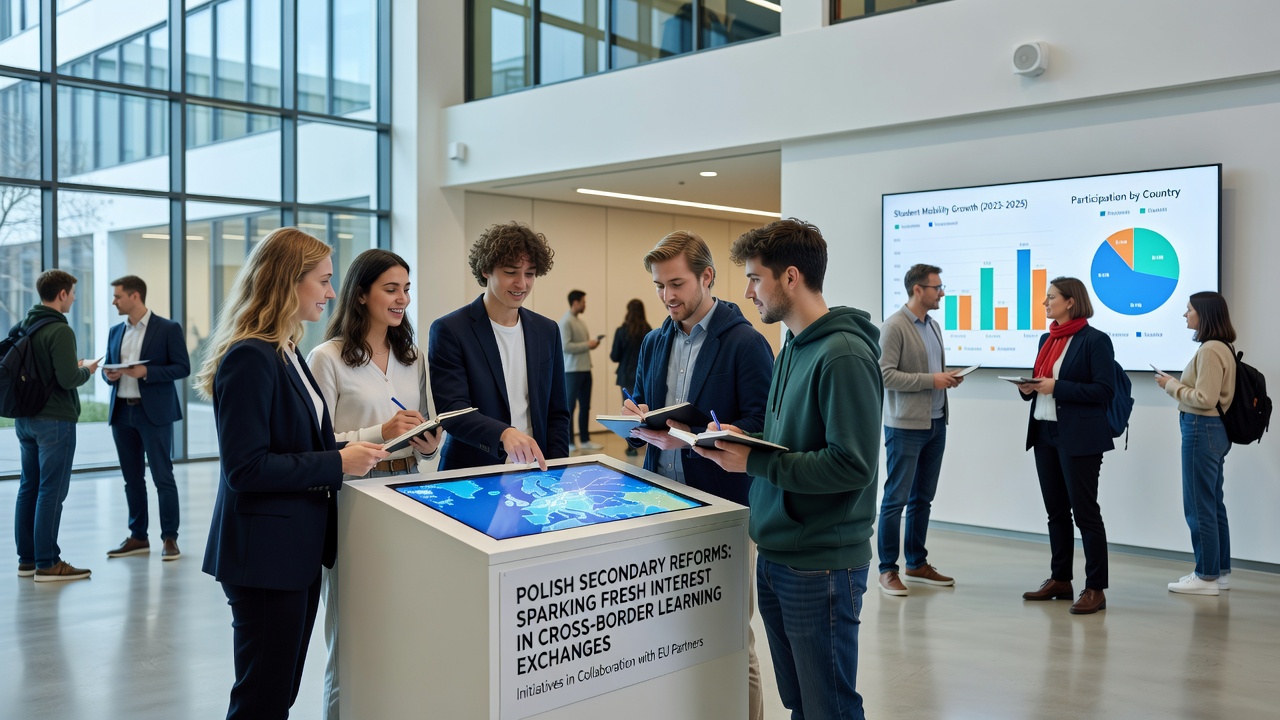
Data from the Polish Ministry of Education indicates that enrollment in exchange programs grew by 22 percent between 2023 and 2025, with particular increases in partnerships involving Germany, the Czech Republic, and Lithuania. Officials attribute part of this growth to updated secondary school requirements that now include mandatory modules on European history and collaborative projects with foreign institutions.
Key Elements of the Reforms
The reforms emphasize project-based learning and require schools to integrate at least one international component into the final two years of secondary education. Students must complete either a virtual exchange, a short study visit, or a joint research assignment with peers from another country, and schools receive additional funding when they establish formal agreements with institutions abroad.
According to figures released by teh European Commission, Poland recorded the third-highest number of secondary-level mobility applications under the Erasmus+ program in 2025, trailing only France and Spain. The same report shows that Polish students accounted for 14 percent of all secondary exchange participants from Central and Eastern Europe during that period.
Regional Patterns and Participation Data
Border regions have seen the strongest uptake. Schools in the Lower Silesian and Opole voivodeships reported a combined 31 percent increase in exchange activity compared with the previous two-year cycle, while institutions in the Pomeranian region documented new partnerships with Swedish and Danish counterparts. Researchers tracking these trends note that proximity to borders reduces travel costs and simplifies visa procedures for shorter visits.
National statistics also reveal shifts in subject focus. Language departments recorded the largest gains, yet science and technology programs now account for 28 percent of exchange placements, up from 19 percent in 2022. One study conducted by the Polish Educational Research Institute found that students who completed cross-border projects scored an average of 7 percent higher on national standardized assessments in mathematics and reading comprehension than peers without such experience.
September 2026 Implementation Timeline
Beginning in September 2026, all secondary schools will be required to submit annual mobility plans detailing planned exchanges, virtual collaborations, and assessment criteria. The Ministry has allocated an additional 48 million PLN to support transportation, teacher training, and digital platform access for participating institutions. Preliminary registration data released in early 2026 shows that 1,240 schools have already filed plans, representing roughly 37 percent of all public secondary institutions.
Administrators in several cities report that demand for host families and partner schools currently exceeds available placements. In response, regional education offices in Kraków and Poznań have launched matching platforms that connect Polish schools with institutions in Austria and Slovakia. These platforms use standardized rubrics to align curriculum goals and ensure credit recognition upon return.
Challenges and Administrative Adjustments
Despite the growth, logistical hurdles remain. Teacher shortages in foreign language instruction have prompted some districts to hire additional staff on temporary contracts, while smaller rural schools struggle to meet the minimum group size required for funded travel. The Ministry has introduced a tiered funding model that provides higher per-student subsidies for schools with fewer than 300 pupils to address this imbalance.
Observers note that coordination with non-EU countries has also expanded, particularly with Ukraine. Joint programs supported by the Polish-Ukrainian Educational Cooperation Agreement now include 18 secondary schools along the eastern border, focusing on shared environmental projects and history education. Participation numbers reached 1,850 students in the 2025 academic year according to bilateral records.
Conclusion
The combination of curriculum updates and targeted funding has produced measurable increases in cross-border learning activity at the secondary level in Poland. Official statistics and program registration data confirm sustained interest through 2026, with new requirements and infrastructure developments expected to shape participation patterns in subsequent years. Continued monitoring by national and European bodies will track whether these exchanges translate into long-term improvements in language skills and international competencies among Polish graduates.