Katja Schmidt · 2 September 2026
Poland's Ministry of National Education has introduced significant revisions to the core curriculum standards effective from the 2025 academic year. These updates seek to modernize content across primary and secondary education while addressing evolving labor market demands and technological progress. Extensive consultations with teachers, experts and regional authorities shaped the final framework to emphasize analytical skills alongside foundational knowledge.
Key Revisions to Subject Areas
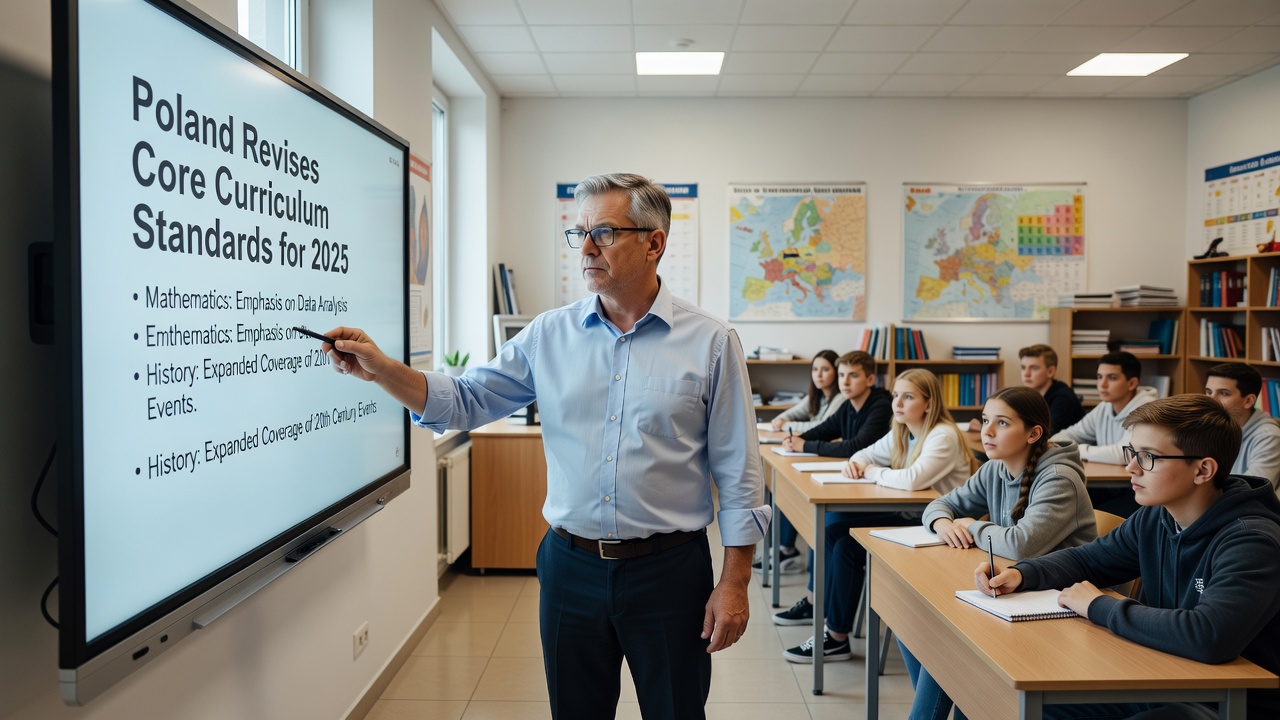
Mathematics and natural sciences now prioritize applied problem solving and data interpretation exercises drawn from everyday contexts. History programs expand coverage of twentieth century European developments and Poland's role in international organizations. Foreign language benchmarks rise to require independent user proficiency by upper secondary level with greater emphasis on communicative competence. Cross curricular modules introduce digital ethics and climate awareness integrated into existing subjects rather than as standalone courses. Implementation includes revised textbooks and mandatory teacher training workshops scheduled throughout 2024 to support consistent delivery nationwide. Regional disparities in resource allocation receive targeted funding to ensure equitable rollout across urban and rural schools.
Assessment methods shift toward formative evaluation and portfolio based projects that demonstrate practical application of concepts. Vocational pathways gain strengthened technical components aligned with industry standards while general academic tracks maintain rigorous preparation for higher education entrance examinations.
Implications for Student Pathways
The revised standards directly influence structured educational routes offered through Corepath Educational Pathways by requiring alignment of advisory services with updated learning outcomes. Students in technical tracks benefit from enhanced focus on digital tools and sustainable practices that match emerging job profiles. Academic oriented learners receive reinforced foundations in core disciplines supporting smoother transitions to university programs. Equity measures aim to narrow performance gaps between regions through additional support for underperforming districts. Ongoing evaluation protocols will track student achievement metrics and teacher feedback during the first three years of implementation to allow evidence based refinements. Overall the changes promote a balanced educational experience that prepares Polish youth for both domestic responsibilities and global participation.