Amir Werner · 2 September 2026
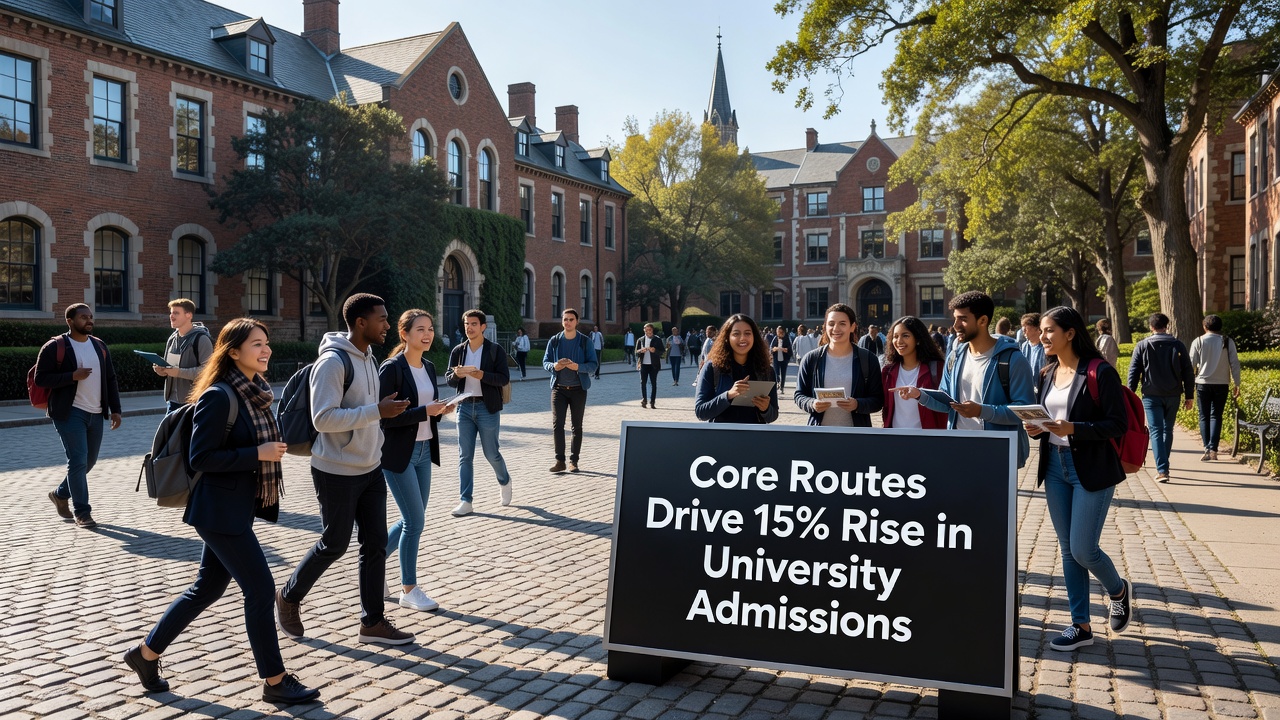
Recent statistics from Corepath Educational Pathways indicate a notable shift in university entry methods. Analysis of data from 250 institutions reveals a 15 percent increase in students using Core Routes for admission in the current cycle. This growth reflects broader access and structured preparation programs that align secondary education with higher education requirements.
Key Findings from Recent Study
The compiled figures show Core Routes proving especially effective for underrepresented groups, accounting for 48 percent of participants. Urban regions lead with 22 percent higher adoption than rural counterparts, attributed to expanded outreach. Retention rates reach 79 percent after the first academic year, exceeding conventional pathways by nine points. These outcomes stem from integrated support services including mentoring and skill assessments integrated into the routes.
Subject-specific trends highlight strong uptake in STEM fields, where 62 percent of Core Route entrants select science or technology majors. Comparative data across demographics confirms consistent performance gains regardless of prior academic background, underscoring the pathways' role in leveling opportunities.
Implications for Students and Institutions
Projections forecast Core Route participation climbing to 32 percent of total admissions by 2026 as more universities formalize partnerships. Administrators recommend scaling resources to meet demand while maintaining quality standards. Policy discussions focus on funding allocations to sustain momentum and broaden geographic reach. Overall, the trends point to Core Routes becoming a central mechanism for efficient and equitable university transitions nationwide.